
.png)
For years, event photography followed a familiar workflow.
The conference ended. Photographers spent time editing thousands of photos, uploaded everything to Google Drive or Dropbox, and shared a link with attendees days—or sometimes weeks—later.
The job was considered done.
Today, that approach no longer matches attendee expectations.
Modern events are no longer judged only by what happens inside the venue. Organizers invest significant time creating meaningful experiences through keynote sessions, networking opportunities, exhibitions, and interactive activities. That experience doesn't end when the closing keynote finishes—it continues through the conversations attendees have afterward, the connections they make on LinkedIn, and the moments they choose to share.
Professional event photos have become an important part of that journey.
Instead of simply documenting an event, they help attendees relive meaningful moments, celebrate achievements, and stay connected long after they've left the venue.
The attendee experience continues after the event
Think about a typical conference attendee.
They attend sessions, meet new people, exchange business cards, visit exhibition booths, and take photos throughout the day.
After the event, many continue those conversations online. They connect with new contacts on LinkedIn, recap key takeaways with colleagues, and share memorable moments from the event.
Professional event photos naturally become part of this post-event experience.
According to Freeman's XLNC Trends Report, attendees who experience meaningful "peak moments" during an event are 85% more likely to return to future events. While memorable sessions and networking opportunities create those moments, professional event photos help preserve them—allowing attendees to revisit the experience long after the event has ended.
For organizers, photos are no longer just another deliverable. They're an extension of the attendee experience.
Fast photo delivery matters more than ever
Today's attendees expect seamless digital experiences.
They stream content instantly, track deliveries in real time, and access information from their phones within seconds. Those expectations don't disappear at events.
If attendees receive event photos while the excitement is still fresh, they're much more likely to revisit the event, reconnect with people they met, and share their experience.
Freeman's research also highlights a broader shift in attendee expectations: people increasingly value experiences that help them achieve their goals with less friction. Every unnecessary step—from waiting for photo links to searching through thousands of images—creates friction that diminishes the overall experience.
The faster attendees can access the photos that matter to them, the more likely they are to engage with them.
Event photos have become an organic marketing channel
Every attendee has the potential to become an advocate for your event.
A speaker shares a keynote photo on LinkedIn.
An exhibitor posts pictures from their booth.
A company celebrates winning an industry award.
These posts often feel more authentic than traditional event marketing because they're shared by real people rather than the event organizer.
This isn't unique to events. Research from Oktopost found that employee-shared content generates eight times more engagement than content shared directly by brands. The same principle applies to conferences and corporate events—people engage more with authentic stories shared by participants than with promotional content from the organizer.
When attendees receive professional event photos quickly, they're naturally encouraged to share them while the event is still fresh in their minds.
Every shared photo extends the reach of your event beyond the venue, introducing your brand to colleagues, friends, and professional networks you may never have reached through paid marketing alone.
Finding photos shouldn't be part of the attendee's job
Imagine attending a conference that generated 8,000 event photos.
You probably appear in fewer than 20 of them.
Would you scroll through thousands of images just to find yours?
Probably not.
This is one of the biggest frustrations attendees face after an event. It's not that organizers failed to share the photos—they did. The challenge is that attendees still have to search for them manually.
As a result, many professionally captured event photos remain buried in folders instead of being viewed, downloaded, or shared.
The problem isn't photo sharing.
It's photo discovery.
As attendee expectations evolve, organizers need to think beyond simply delivering a gallery. The experience should help every attendee quickly access the moments that matter to them.
Turning event photos into a better attendee experience
When event photos are easy to access, attendees are more likely to revisit the event, reconnect with new contacts, and share their experience online. What was once considered a post-event task becomes another opportunity to strengthen engagement.
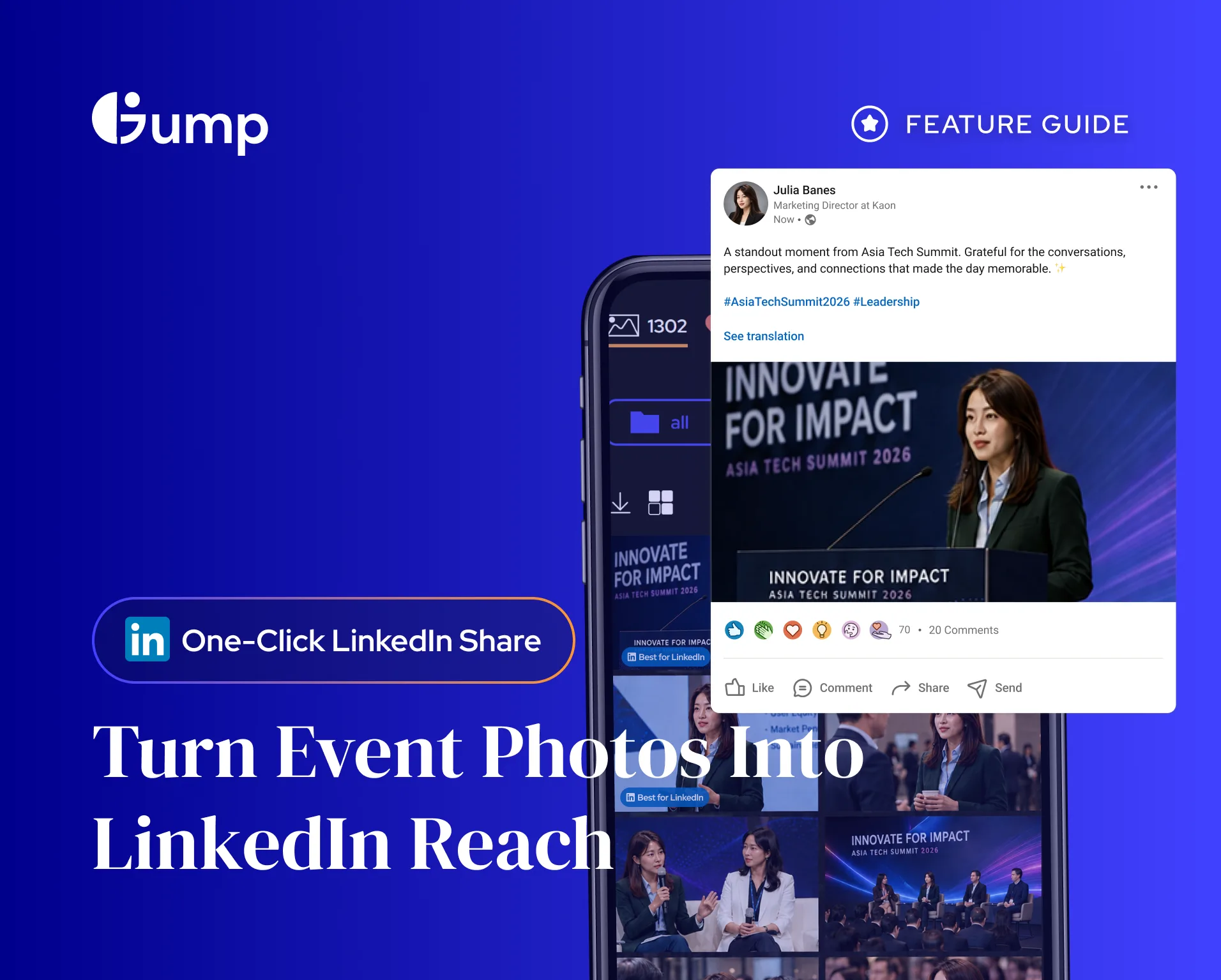
This is why many organizers are moving beyond traditional file-sharing platforms toward event photo platforms designed specifically for conferences and corporate events. Instead of asking attendees to search manually, they can instantly find their own photos, receive personalized access, and share them while the event is still top of mind. Features like AI-powered photo search, private galleries, and LinkedIn-ready sharing are helping organizers deliver a more seamless post-event experience while reducing manual work for their teams. These workflows are increasingly being adopted by event-focused platforms such as Gump, which are built around attendee engagement rather than simple file storage.
Final thoughts
Professional event photography has always captured memorable moments.
What's changing is how those moments are delivered and experienced.
Today's attendees expect fast, personalized, and convenient access to their photos—not because it's a nice bonus, but because it's now part of the overall event experience.
As Freeman's research suggests, memorable experiences encourage attendees to return. By making event photos easy to discover and share, organizers can extend those memorable moments beyond the venue and create lasting value for attendees, speakers, sponsors, and the event itself.
References
Freeman. New Freeman Trends Report Reveals What Really Matters to Attendees — And It's The X Factor that Makes the Experience. https://staging.freeman.com/about/press/new-freeman-trends-report-reveals-what-really-matters-to-attendees-and-its-the-x-factor-that-makes-the-experience/
Freeman. Unpacking XLNC: Bringing the X Factor to Attendee Experiences. https://www.freeman.com/resources/freeman-experience-trends-report/
Oktopost. Employee Advocacy Statistics (via LinkedIn). https://www.oktopost.com/blog/employee-advocacy-statistics/