
.png)
Over the past few years, event photography has become dramatically more content-heavy.
One conference, summit or exhibition can easily generate 5,000 to 10,000 photos across keynote sessions, networking lounges, sponsor booths, VIP rooms and candid event coverage.
But while the rest of the event experience has become mobile-first, self-service and digital, event photo delivery is still surprisingly stuck in the mid-2000s.
Many teams still rely on:
Google Drive
Dropbox folders
WeTransfer links
manually sorted galleries
The result is that attendees often spend more time searching for photos than actually enjoying them.
For modern event teams, the problem is no longer capturing the content.
The real issue is discoverability — how quickly attendees, sponsors, speakers and organisers can actually find the images that matter to them.
The Problem With Traditional Event Galleries
The old workflow is simple:
photographers upload everything
organisers send out one link
attendees search manually
That might still work for smaller events.
But once galleries grow into the thousands, the experience starts breaking down quickly.
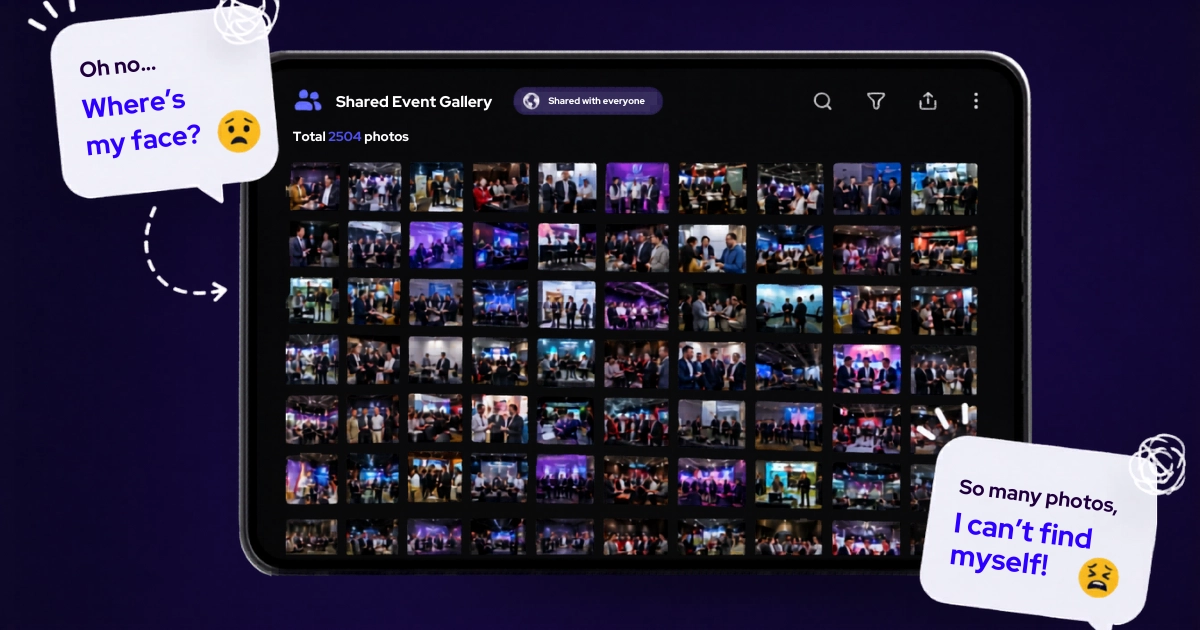
At large events, attendees often:
scroll endlessly through thumbnails
open multiple folders trying to find one room or one session
zoom repeatedly into group photos
leave without finding a usable image
Even when the photography itself is excellent, the gallery experience can still feel slow and frustrating.
And when guests cannot easily find themselves, engagement usually drops very quickly.
Why People Do Not Want Every Event Photo
Most attendees are not interested in browsing the full visual archive of an event.
They usually want a much smaller set of moments:
their keynote appearance
networking interactions
sponsor booth visits
candid moments with colleagues
team photos
VIP interactions
That is why traditional event galleries now feel outdated.
They treat every attendee the same, while modern users increasingly expect digital experiences to feel:
personal
fast
mobile-friendly
self-service
This shift has already happened across:
streaming platforms
e-commerce
social media
event apps
digital ticketing
Event galleries are starting to move in the same direction.
Event Galleries Are Shifting From Storage to Experience
For years, event galleries were designed around storage.
Upload the files. Share the link. Archive the content.
But modern attendees no longer judge events only by what happens onsite.
They judge the full digital experience:
registration
check-in
networking apps
follow-up communication
content access
photo delivery
That changes how galleries are expected to function.
The real problem is no longer storage.
It is how quickly people can discover relevant photos without friction.
How AI Face Search Improves Event Photo Discovery
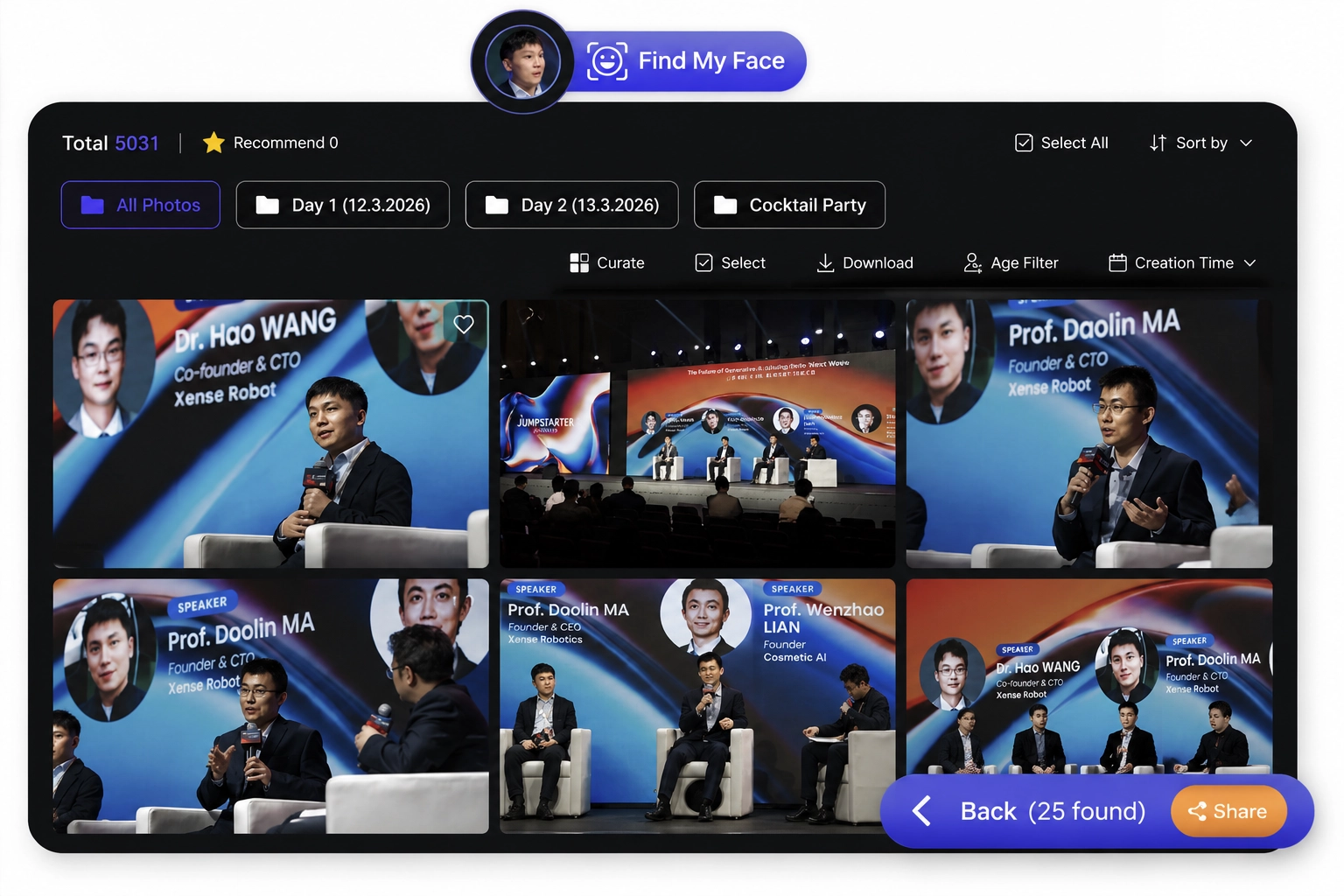
This is where AI face search for event photos changes the experience completely.
Instead of scrolling through thousands of unrelated images, attendees upload a selfie and the system retrieves matching photos within seconds.
That turns a generic gallery into something:
searchable
personalised
interactive
significantly faster to use
Imagine a corporate summit with:
8,000+ photos
multiple stages
roaming photographers
sponsor activations
media coverage
networking sessions
Without AI face search, one attendee can easily spend 20 to 30 minutes trying to locate just a few photos manually.
With AI-powered photo search, that same process can drop to around 5 seconds per person.
That difference completely changes how attendees interact with the gallery.
Why AI Face Search Matters for Photographers
For photographers, this is not only a convenience feature.
It affects:
client satisfaction
operational efficiency
gallery engagement
competitive positioning
High-volume events often create hours of repetitive admin after the shoot:
answering “Do you have more photos of me?” requests
manually locating files
resending downloads
helping attendees search galleries
AI face search helps reduce much of that support workload while improving the client experience at the same time.
It also helps photographers differentiate themselves.
Most studios still deliver through standard galleries or file-transfer links. Offering searchable event galleries creates a much more modern and premium experience that aligns with current attendee expectations.
Why AI Event Photo Galleries Matter for Corporate Teams
For organisers, marketing teams, HR teams and sponsors, searchable event galleries solve both operational and branding problems.
Faster content for social and PR
Modern events need content quickly for:
LinkedIn recaps
press releases
sponsor reports
internal newsletters
future event promotion
When the right images can be found in minutes instead of hours, marketing and communications teams move significantly faster.
Less manual searching
When photos are spread across shared drives, folders and email threads, teams often spend hours searching for:
VIP shots
speaker photos
sponsor branding moments
team interactions
A searchable gallery reduces:
email chains
manual searching
repetitive requests
dependency on one person who remembers where files are stored
Better attendee and sponsor experience
Speakers want stage photos.
Sponsors want visibility proof.
VIPs want polished moments they can reuse professionally.
When people can retrieve those images more easily, the event feels:
more organised
more premium
more professional
more worth returning to
More organic social sharing
People are significantly more likely to share event photos when they can actually find themselves quickly.
That often leads to:
more attendee-generated content
wider social reach
stronger post-event visibility
higher gallery engagement
The gallery itself becomes part of the event experience.
The Bigger Shift Behind Modern Event Galleries
The larger industry trend is becoming increasingly clear.
Event galleries are moving away from:
static folders
generic links
passive file storage
…and toward:
searchable experiences
self-service access
personalised discovery
mobile-first workflows
That shift reflects what people already expect from modern digital products:
instant access
personalisation
speed
convenience
Event photo workflows are no longer just a file-delivery problem.
They are increasingly part of the attendee experience itself.
How Gump Fits Into Modern Event Photo Sharing
Gump is built specifically for high-volume event photography and corporate event workflows.
With Gump AI Face Finder, attendees upload a selfie, the system searches across large event galleries, and matching photos can appear in about 5 seconds per person.
That helps:
photographers reduce support workload
organisers improve attendee experience
sponsors retrieve branded moments faster
guests engage with galleries more actively
Gump works particularly well for:
conferences
exhibitions
networking events
university events
corporate celebrations
large-scale branded experiences
Instead of functioning like a storage folder, the gallery becomes a faster and more personalised event experience.
Frequently Asked Questions
How does AI face search for event photos work?
In a typical workflow, attendees upload a selfie and the system compares that face against the event gallery to retrieve matching photos. This replaces manual browsing with a much faster and more personalised search experience.
Why is AI face search better than Google Drive or Dropbox for event photos?
Drive and Dropbox are designed for file storage and transfer, not attendee-level photo discovery. AI face search is better suited for large event galleries because it helps people find relevant images without manually opening hundreds of thumbnails.
Do photographers benefit from AI face search?
Yes. AI-powered event galleries can reduce repetitive support work, improve client satisfaction, increase gallery engagement and help photographers deliver a more premium experience.
Why do corporate event teams need searchable galleries?
Corporate teams often need photos quickly for PR, social media, sponsor reporting and internal communications. Searchable galleries make those workflows significantly faster and easier to manage.
Final Thoughts
The biggest issue with traditional event galleries is not the number of photos.
It is discoverability.
People no longer want to manually browse thousands of images just to find themselves. They expect event experiences to feel as fast and personalised as the rest of the digital products they already use every day.
AI face search helps make that possible by turning large event galleries into searchable, self-service experiences designed around the attendee.
Give your attendees a smoother post-event experience with Gump AI Face Finder — upload a selfie and discover matching event photos in seconds.